How Spokane's Multi-Family Tax Exemption Works
This example uses one real Spokane property, 1611 W 9th Ave, to walk through what the current MFTE tiers make possible for any project this size.
The property
The property today
1611 W 9th Ave: a triplex on a mature, tree-lined block.
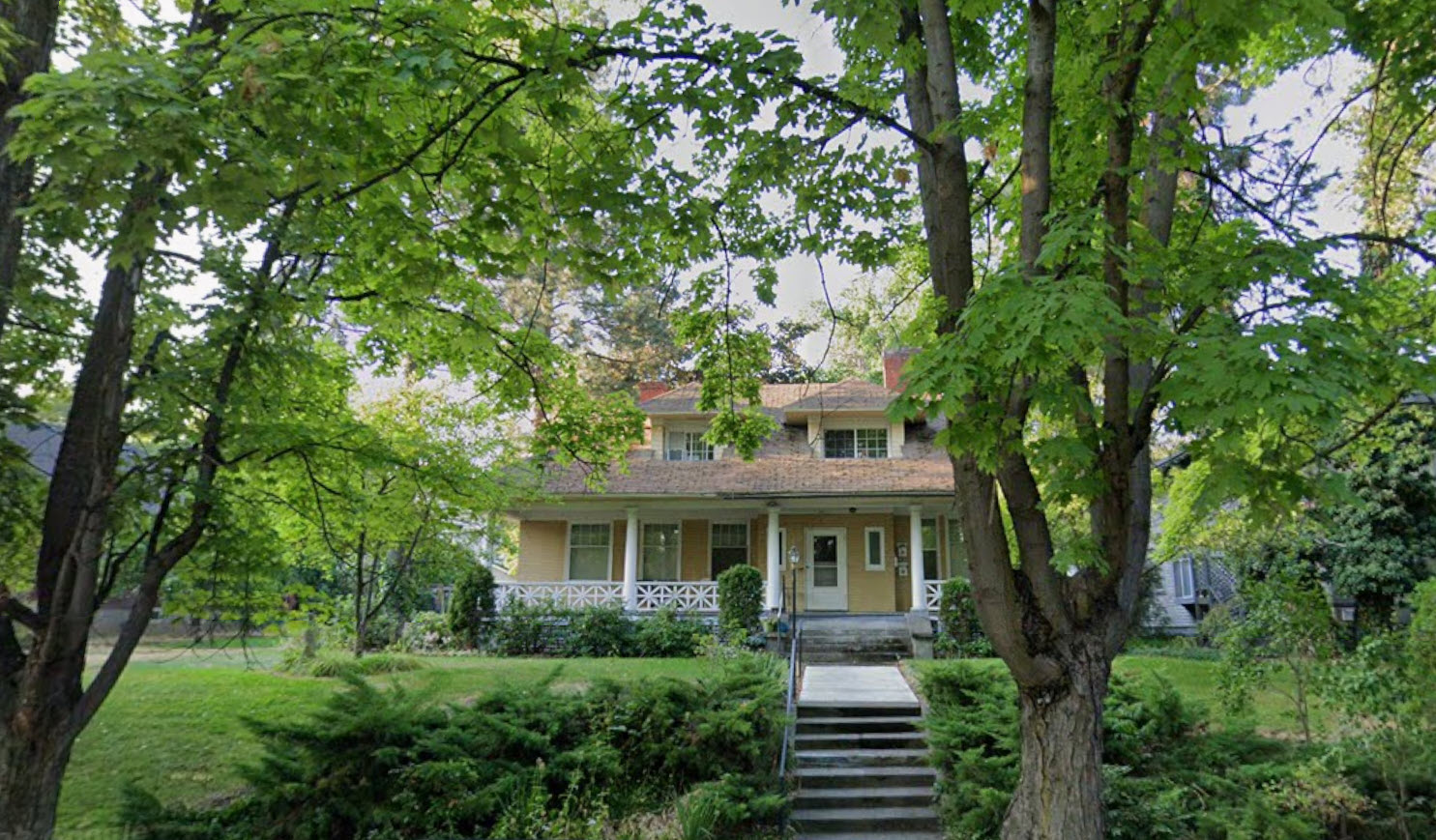
| Address | 1611 W 9th Ave, Spokane, WA 99204 |
|---|---|
| Parcel ID | 25244.4303 - Cannon Add, Block 46, Lot 3-4 |
| Current use | Triplex, owned by Greenlake Rentals LLC |
| Development plans | Demolish the existing house, remove trees including street trees, build two six-plexes |
Parcel and ownership details are from the developer's own preliminary site plan submission, a public document.
The plan
The site plan
Salvage or demolish the existing triplex and garage, restore the original plat lots with a boundary line adjustment, then build one 3-story six-plex on each lot.
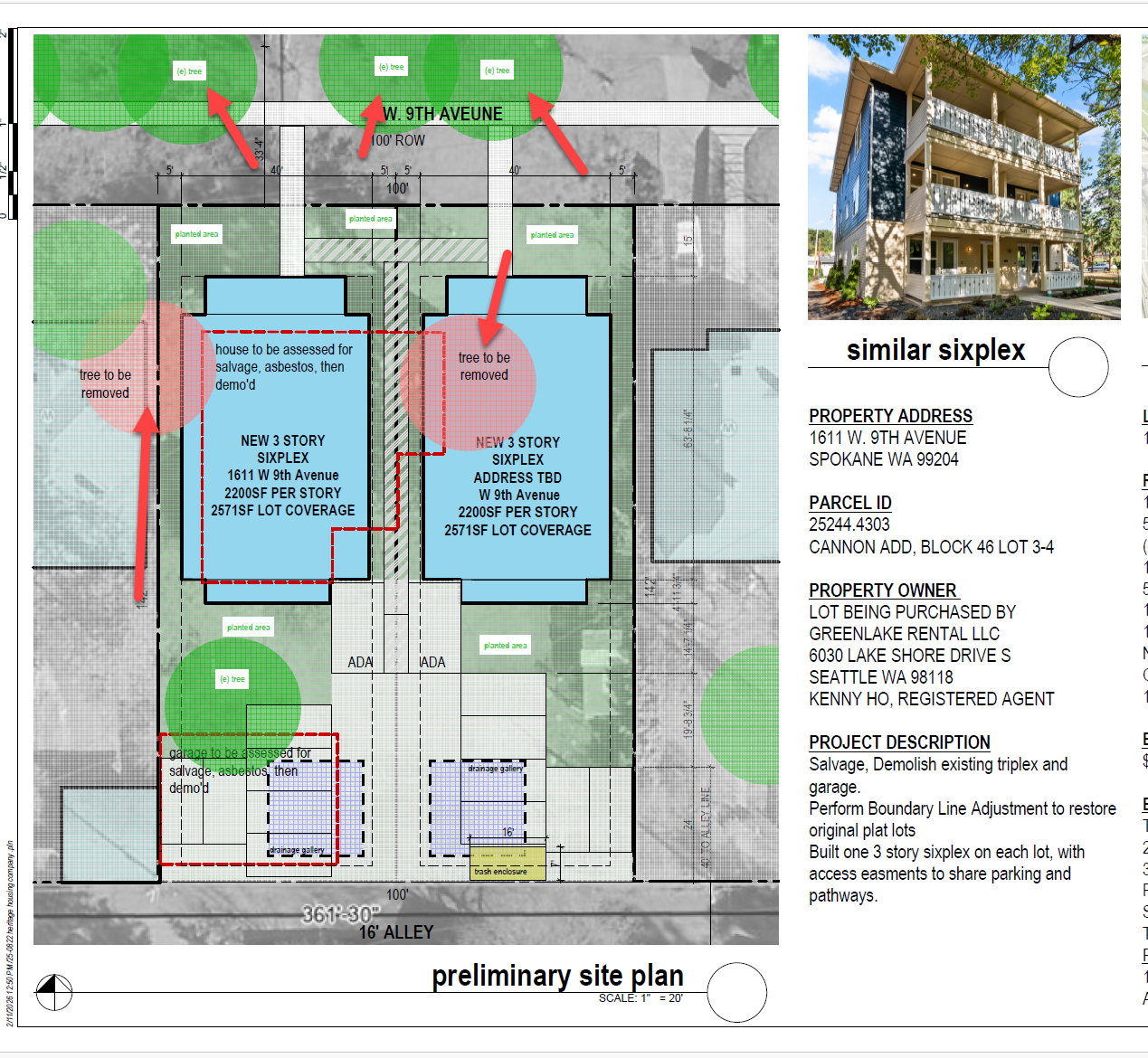
- Demolish the existing house and garage (after salvage/asbestos assessment)
- Boundary Line Adjustment to restore the two original plat lots
- One new 3-story six-plex per lot, 12 new housing units total, 2,200 sf per story, 2,571 sf lot coverage each
- Shared parking and pathways via access easements between the two buildings
- Site plan shows the existing trees, including street trees, removed as part of the site prep
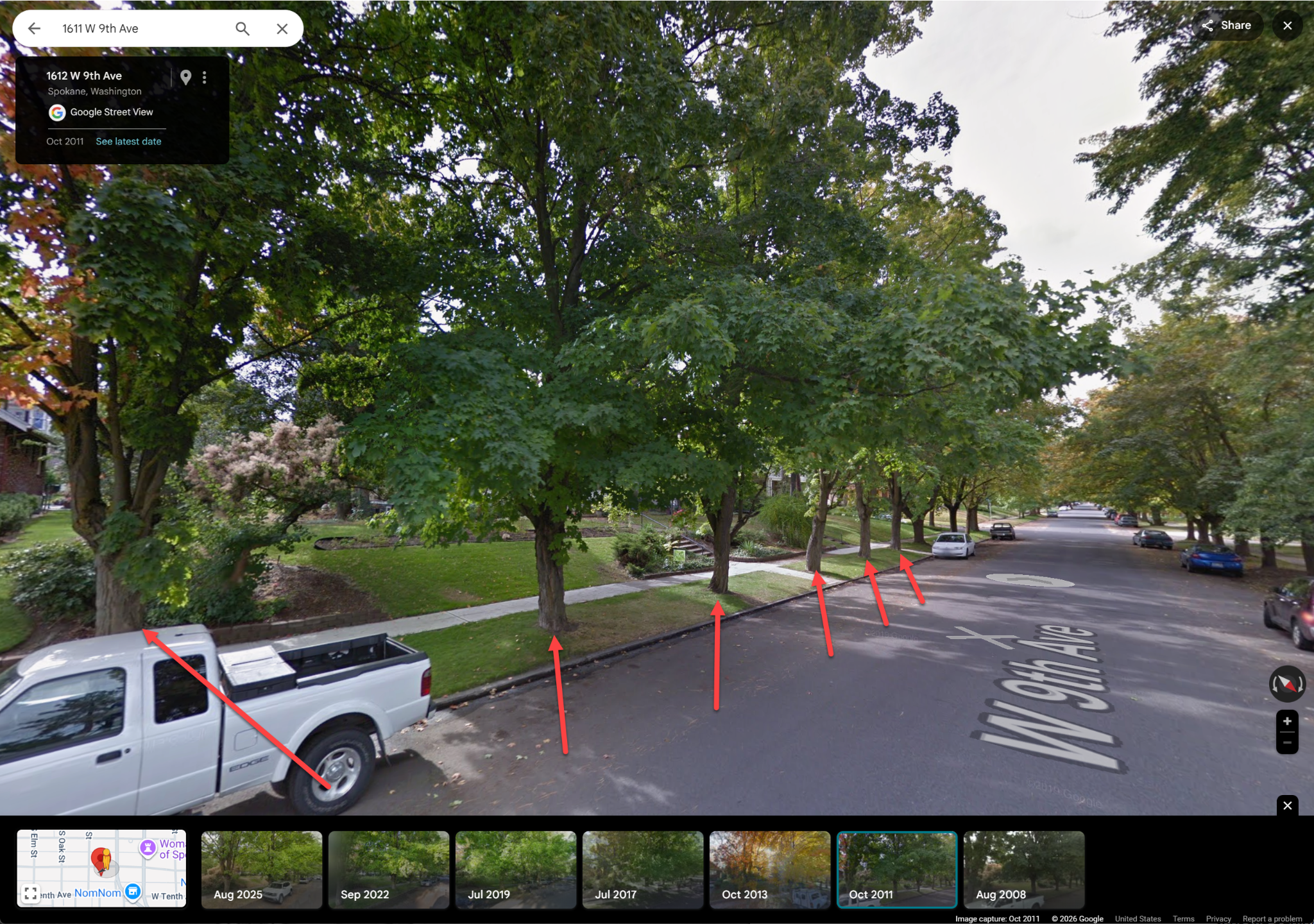
The street trees
W 9th Ave today: the mature street trees the site plan shows being removed.
What City notes say about environmental review
A City senior planner's preliminary guidance says SEPA review would not be required unless the proposal exceeded 20 residential units, 40 parking stalls, or 500 cubic yards of cut or fill. The concept shown here has 12 units, below the unit threshold. Parking, grading, and the final application still matter to the determination.
The preliminary SEPA guidance
The highlighted line is from the City's pre-development notes for 1611 W 9th Ave.
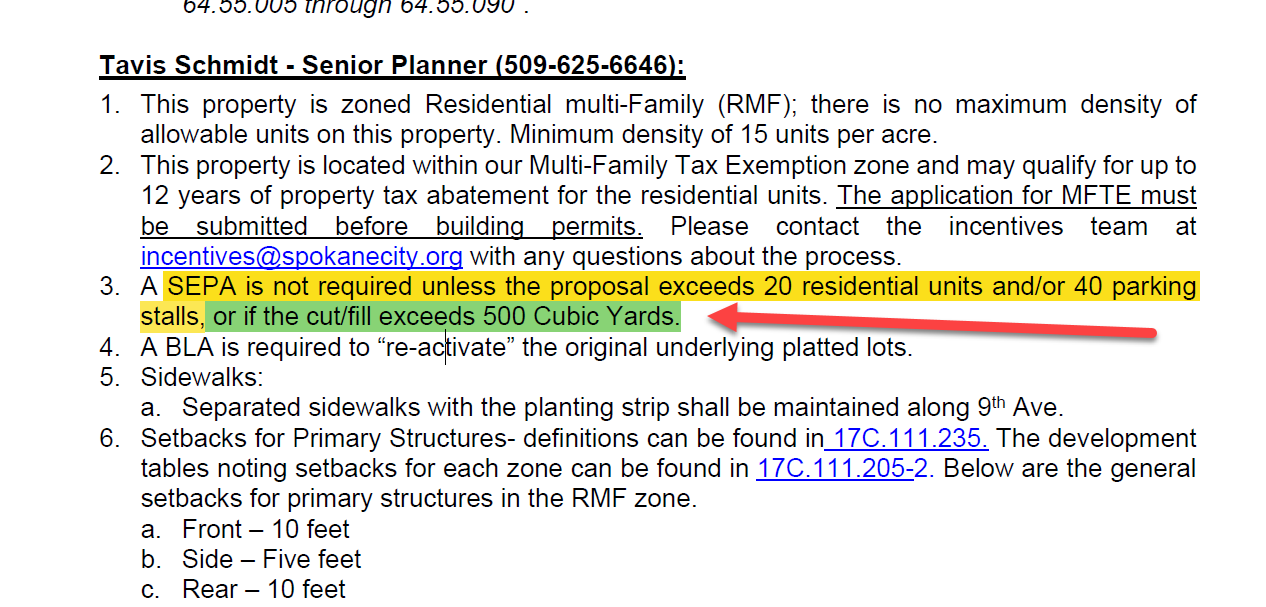
What this answers: the note explains why this concept may not require SEPA review. It does not identify which separate rules or permit reviews would address trees, stormwater, traffic, existing homes, or neighborhood context. That remains a specific question for the City. This is preliminary staff guidance, not a permit approval or final SEPA determination.
The tax exemption
Spokane's Multi-Family Tax Exemption (MFTE) program exempts the new residential construction itself from property taxes for a set number of years; the land underneath, and any commercial space, stays taxed. There are three tracks, and they are not interchangeable:
| Track | Affordability requirement | Where it applies |
|---|---|---|
| 8-year | None. Every unit can rent at full price. The only track usable for student housing. | Spokane Targeted Investment Area (STIA) only: 34 economically distressed census tracts |
| 12-year | 4–11 units: at least 25% of units income- and rent-restricted. 12+ units: at least 30%. | Citywide: STIA and the Affordable Housing Emphasis Area (AHEA) |
| 20-year | 25% of units sold permanently affordable (deed-restricted) to owners at or below 80% AMI, through a qualified nonprofit or housing authority. The rest can sell at whatever the market brings. | Citywide: STIA and AHEA |
Which tracks a given parcel can use depends on where it falls on the City's STIA/AHEA map. The City's own numbers: savings of roughly $966 per $100,000 of assessed value on the exempted housing, plus $1,000 and $2,000 application fees per parcel. The exemption starts January 1 after the final certificate is recorded.
MFTE succeeds when the tax exemption causes homes to be built that otherwise would not be, and when the restricted homes remain meaningfully below the comparable market for the promised period.
How much of your paycheck would go to rent?
The City says Spokane is short on homes below 80% AMI. But its 12-year tax break can count a one-bedroom at 115% AMI as affordable, even at $2,382 a month. Whether the restriction lowers anyone's rent depends on where market rents actually sit. The City's own 2026–27 tables make the comparison easy:
| Unit | Max rent at 80% AMI(low income) | Max rent at 115% AMI(moderate income) |
|---|---|---|
| Studio | $1,547 | $2,223 |
| 1 bedroom | $1,658 | $2,382 |
| 2 bedroom | $1,768 | $2,541 |
The same City documents note the average Spokane rent is $1,417 a month. Read that against the table: the "low income" ceiling for a 1-bedroom ($1,658) sits above the citywide average. The restriction binds only where market rents climb past the caps.
This project proposes 12 homes. Under the 8-year track, none must have restricted rents. Under the 12-year track, some would—but the City’s current rent ceiling can still exceed the average Spokane rent.
Put simply: a project like this can maximize its property tax exemption without lowering rent for most renters in the short term. For the owner, the exemption can materially reduce property taxes on the new construction for 12 years. The public benefit depends on the selected track and whether its rent ceilings are below market rents.
No MFTE application or certificate for 1611 W 9th Ave has turned up in the public record. We do not know whether this project will receive a tax break or which track it would use. The comparison above describes what the program’s rules allow, not what this owner has requested.
What a 12-year filing actually looks like
Here's a real 12-year MFTE certificate from a different property: 951 W Walton Ave, granted to CAP Garland LLC in December 2025. It shows what the 12-year track's paperwork requires. It has no connection to 1611 W 9th Ave.
What the annual report tracks
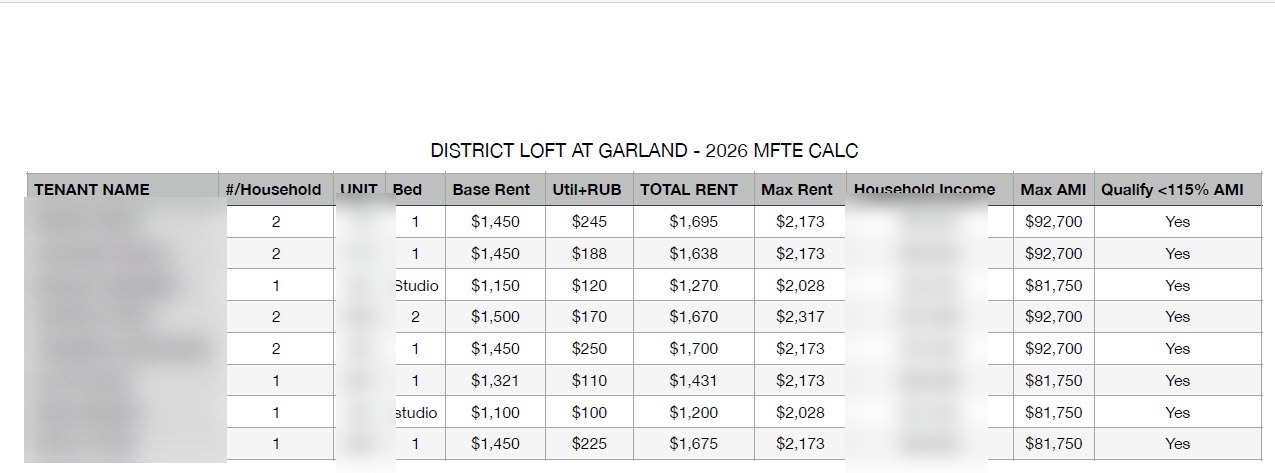
This 2026 CAP Garland worksheet reports base rent, utility or RUB charges, total rent, the allowed maximum rent, household income, the applicable income limit, and whether each household qualifies. Tenant names, unit numbers, and household-income figures are blurred here to protect current residents.
Rent and income compliance
A redacted MFTE annual report showing the fields used to compare actual housing costs with the program limits.
Certificate of Tax Exemption (12-year)
The recorded City document granting a 12-year exemption, including the 30%-affordable commitment for projects of 12+ units and annual reporting requirements.
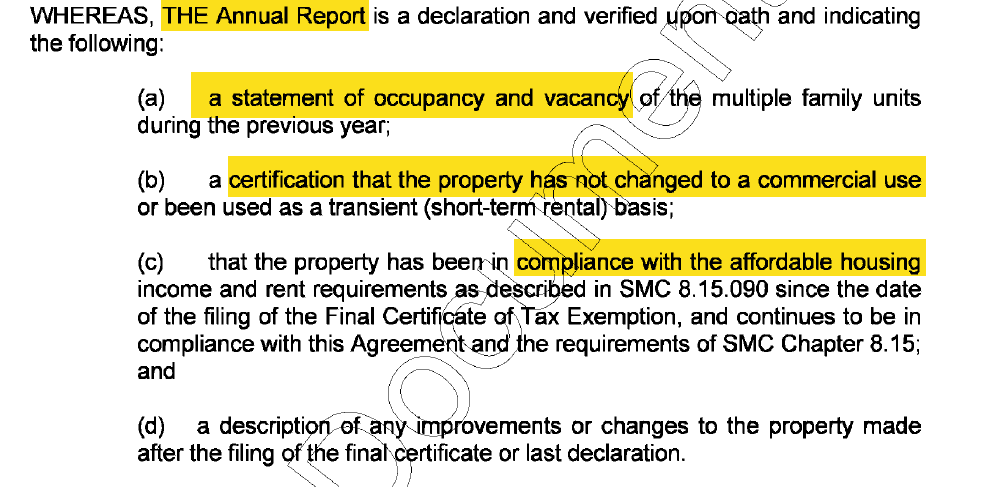
Annual Report Oath
The sworn annual declaration owners must file, certifying continued residential use and compliance with the income and rent requirements.
Why this matters
This isn't about one developer. It's about what the City's own rules make possible. An MFTE exemption frees a project's new construction from property tax for years at a time: 8, 12, or 20, depending on the track. Washington's property tax is budget-based, so the exemption does not lower what the City collects; it spreads the exempted parcel's share across everyone else. In exchange, the public is supposed to get affordability. But when the rent caps sit above market, the affordability requirement can ring up like a coupon at full price.
So these incentives are worth knowing about, and not just by the developers who use them. And there is something the City can do right now. It already collects a sworn annual MFTE report from every participating owner each February, covering rents, occupancy, and compliance, but none of it is published where the public can use it. Put it online, and renters could finally see what these exemptions buy: what the "affordable" units actually rent for, how many sit open, and whether the City is getting more affordable housing for the tax it forgoes.